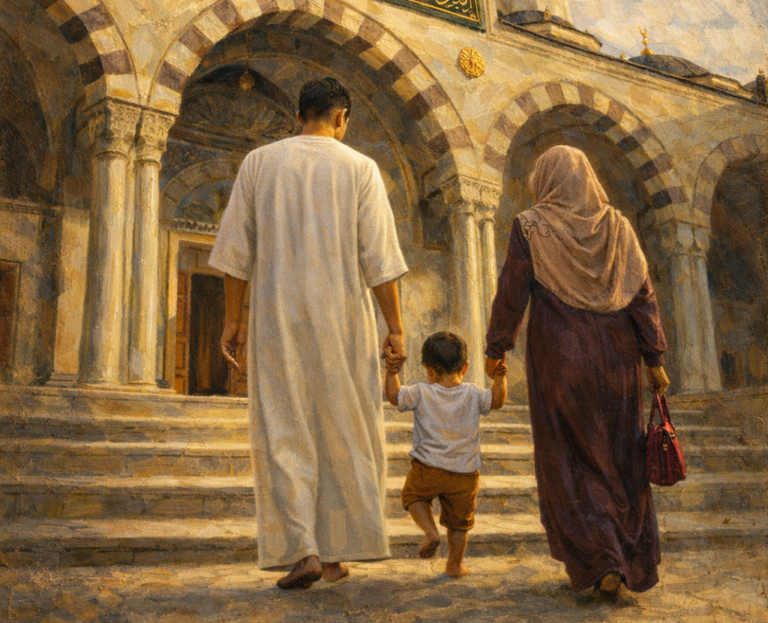

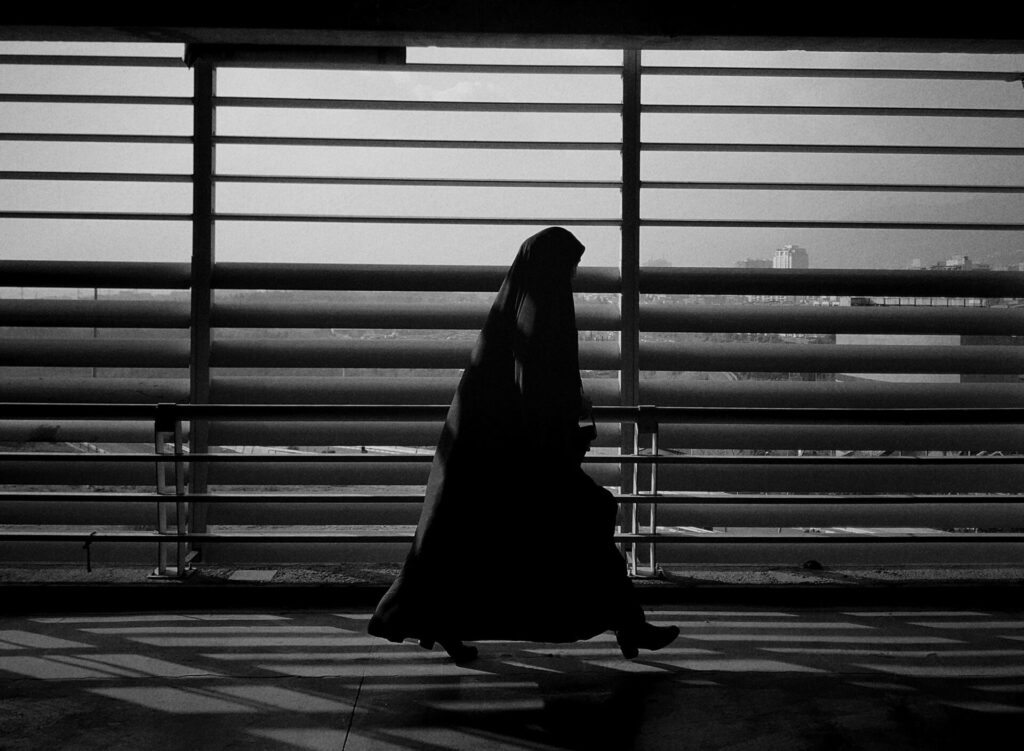
Today, the word hijab remains widely recognized and frequently discussed among both Muslims and non-Muslims, particularly in the years following the 9/11 attacks. The events have sparked global interests and debate about Islam, significantly impacting the lives of Muslims in different ways. The rise of Islamophobia has led some Muslim individuals – both men and women – to rethink about the visibility of their religious identity. Signs of their faith, such as the hijab, may evoke discomfort in others or may have put their own selves at a disadvantage when seeking social acceptance, safety, or access to opportunities.
Other discourses have also shaped the negative perceptions some people hold about the hijab, contributing to broader misconceptions about Islam. These narratives often portray the religion as one that restricts personal freedom, imposes rigid religious practices, and hinders individuals from realizing their full potentials as active and valuable members of both local and global communities. Influential frameworks such as Eurocentrism, feminism, liberalism, and individualism – though varied in their intent and scope – have all, in different ways, contributed to these interpretations.
The tradition of covering the head dates back to early civilizations, including ancient Mesopotamia (modern-day Iraq). Historically, head coverings such as bands, crowns, and turbans were considered as means of beautification for both men and women. It also informed of one’s status and class, as practiced by female Assyrians in 1250 – 600 BCE.
The consensus of the obligation of covering in Islam is indisputable. Allah (SWT) mentions in the Quran:
{Let them draw their veils over their chests, and not reveal their ˹hidden˺ adornments except to their husbands, their fathers, their fathers-in-law, their sons, their stepsons, their brothers, their brothers’ sons or sisters’ sons, their fellow women, those ˹bondwomen˺ in their possession, male attendants with no desire, or children who are still unaware of women’s nakedness.} 24:31
Ibn ‘Abbas radhiyallāhu ‘anhumā (d. 68H) elaborates that a Muslimah should cover her hair, bosom, neckline, and the sides of her face. Imam At-Tabarāni rahimahullāh (d. 360H) further explains that “hidden adornments” refer to what are not permissible for a Muslimah to reveal during her prayers e.g., her hair, neck, and two hands.
The term hijab, which literally means “veil”, signifies something that is concealed or kept from view. In the Islamic tradition, it demonstrates the principle of modesty that is required of women – just as men are also commanded to observe modesty in their speech, appearance, and conduct. It is also a form of ‘Ibadah, or devotion, that entails embodying both humility and love towards Allah (SWT). Indeed, humans are created to worship Allah (SWT) (51:56).
He (SWT) clearly states in Sūrah An-Nūr regarding the obligatory modesty both men and women should observe:
{˹O Prophet!˺ Tell the believing men to lower their gaze and guard their chastity. That is purer for them. Surely Allah is All-Aware of what they do. And tell the believing women to lower their gaze and guard their chastity, and not to reveal their adornments except what normally appears.} 24:30-31
In an era where gender-related discourses are rampant across digital platforms, discussions about the hijab can easily spark intense debates surrounding personal freedom, individual choice, anti-Islam rhetoric, and socio-legal rights. Polarity may occur online due to several factors, such as users expressing their views in ways that are dismissive, inflammatory, or offensive.
As clear and direct as the religious injunction may seem, one might find it challenging to maintain consistency in wearing the hijab. Another may struggle with achieving the recommended level of coverage, while others wrestle with personal readiness or shifting perspectives on its importance. These are lived experiences of some of our sisters in Islam, who often face both internal challenges – such as the desire to feel spiritually prepared, or grappling with doubts – and external pressures, including unsolicited comments or “advice” from others. Together, these obstacles can make it difficult for some women to fully appreciate the hijab as an act of devotion to Allah (SWT), rather than simply a religious obligation.
In one way or another, we can acknowledge that every individual struggles differently – the challenges we face in the path of faith and spirituality are unique, and Allah (SWT) tests us according to what we can bear.
This understanding, however, should inspire a sincere and ongoing effort to seek Allah’s (SWT) pleasure – a notable end goal that stands as the golden ticket to enter our Final Abode in the Hereafter.
Our ‘forever’ is not in this Dunya. If we knew how vast Allah’s mercy is, we would be more committed to enjoin in good acts.
How does the obligation of hijab mirror His mercy, one might ask? A wisdom, amongst many others, behind the ruling of hijab being obligatory may lie on the status of women in Islam. Islam came with a cultural reform that has hitherto elevated the status of women throughout Humankind, and has shifted how women are appreciated and taken care of in society.
This is reflected in Prophet Muhammad’s Hadīth:
“Treat women nicely, for a woman is created from a rib, and the most curved portion of the rib is its upper portion, so, if you should try to straighten it, it will break, but if you leave it as it is, it will remain crooked. So, treat women nicely.” (Sahīh Al-Bukhāri 3331).
Albeit the different reasons behind a Muslimah’s wearing of the hijab today e.g., sincere devotion to Allah (SWT)’s command, or following parents’ pressure, or a political or a fashion statement, the act of covering our ‘awrah remains obligatory in Islam, and rewards are guaranteed for those who do so. The Almighty (SWT) says:
{For those who do good in this world, there is goodness. But far better is the ˹eternal˺ Home of the Hereafter. How excellent indeed is the home of the righteous.} 16:30
{And those who believe and do good, We will soon admit them into Gardens under which rivers flow, to stay there for ever and ever. Allah’s promise is ˹always˺ true. And whose word is more truthful than Allah’s?} 4:122
As one does more good deeds for the sake of Allah (SWT), his/her faith and consciousness of The Almighty increases as well. This should motivate any Muslim to be more religiously committed through the obligatory and voluntary acts that Islam has specified in its classical texts, and to exemplify our past Muslim predecessors and scholars’ humility in front of Allah (SWT).
For an example, ‘Aishah radhiyallāhu ‘anhā mentioned that when Verse 31 of Sūrah An-Nūr was revealed, the female Sahābiyyāt instantly covered themselves with a piece of their murūț (an outer garment, or a cloak) without any hesitance.
Simultaneously, we should remember that Islam places great emphasis on the importance of setting sincere and good intentions. Our actions are judged and rewarded in accordance with the intentions behind them, as they shape and guide the direction of our behavior.
Abu Hurairah radhiyallāhu ‘anhu narrated that Prophet Muhammad sallallāhu ‘alayhi wasallam said:
“A believer who is strong (and healthy) is better and dearer to Allah than the weak believer, but there is goodness in both of them. Be keen on what benefits you and seek help from Allah, and do not give up.” (Sahih Muslim 2664; Bulugh Al-Maram 1526).
Following is a Prophetic prayer and suggested intentions by the author that one may have when she wears the hijab:
اللَّهُمَّ لكَ الحمدُ، أنْتَ كَسَوْتَنِيه، أسألُكَ مِنْ خَيْرِهِ وخَيْرِ ما صُنِعَ له، وأعوذُ بكَ مِنْ شرِّه وشرِّ ما صُنِعَ له
Transliteration:
Allāhumma lakal-ḥamdu ‘anta kasawtanīhi, ‘as’aluka min khayrihi wa khayri mā ṣuni`a lahu, wa ‘a`oothu bika min sharrihi wa sharri mā ṣuni`a lahu.
Translation:
O Allah, praise is to You. You have clothed me. I ask You for its goodness and the goodness of what it has been made for, and I seek Your protection from the evil of it and the evil of what it has been made for. (Sunan Abi Dāud 4020; Hisnil Muslim 6; Riyadh As-Sālihīn 412).
We are never truly independent of the Divine. At every moment, we are always in need of Allah (SWT) – His mercy, His guidance, and His help in all that we do and in every decision we make. This deep reliance is beautifully captured in our daily recitation of Verse 5 of Sūrah Al-Fātihah: “You ˹alone˺ we worship and You ˹alone˺ we ask for help.” In this verse, we acknowledge our weaknesses and limitations, hence our neediness of Allah’s (SWT) guidance.
Ibn ‘Abbas radhiyallāhu ‘anhumā narrated that the Messenger of Allah sallallāhu ‘alayhi wasallam said:
“Be mindful of Allah and He will protect you. Be mindful of Allah and you will find Him before you. When you ask, ask Allah, and when you seek aid, seek Allah’s aid.”
(Graded Hasan; Sunan At-Tirmizi 2516).
When we align our appearance, thoughts, and actions with the teachings of the Quran and the Sunnah, we place our trust in Allah (SWT) to reward our obedience accordingly due to His Wisdom, for He is All-Wise and All-Knowing – both in this life and the next.
Wearing the hijab is, first and foremost, an act of submission to Allah (SWT) and His command – done for Him alone, not for societal expectation or approval. It stands as a declaration of faith despite our lack of understanding the deeper wisdoms behind its obligation. Indeed, remaining steadfast on this path is not without its challenges – each step requires patience, strength, and sincere devotion.
Thus, another prayer that we can recite is:
اللهُمَّ أَعِنّيْ عَلَى ذِكْرِكَ وَشُكْرِكَ وَحُسْنِ عِبَادَتِكَ
Transliteration:
Allāhumma aʿinnī ʿalā dhikrika wa shukrika wa ḥusni ʿibādatik.
Translation:
O Allah, help me to remember You, to be grateful to You, and to worship You in the best manner.
The concept of freedom in Islam may not align with the modern, secular definition – one that often ties freedom to the unrestricted pursuit of man’s nafs, rather than to divine guidance and sacred principles. In truth, our Creator knows His creation best, while our human intellect and capacity remain limited in fully grasping His wisdom.
Yet, this should not hinder us from continuing to pursue excellence in both our religious and worldly endeavors – within the divine boundaries set by Allah (SWT), which are ultimately for our benefit and protection. As Sufyān bin ‘Abdullāh Ath-Thaqafī radhiyallaahu ‘anhu said:
“O Messenger of Allah, tell me something about al-Islam which I can ask of no one but you.” He sallallahu ‘alayhi wasallam said, “Say I believe in Allah — and then be steadfast.”
(Forty Hadith of An-Nawawī 21).
Despite the many times we may have faltered through our actions, speech, or thoughts, such as thinking ourselves superior to others, believing we can delay wearing the hijab, or assuming that time is on our side and repentance can come later, we are reminded of a powerful truth: Allah (SWT)’s mercy encompasses and surpasses His wrath. In a Hadīth narrated by Abu Hurairah radhiyallaahu ‘anhu, Prophet Muhammad sallallaahu ‘alayhi wasallam said therein:
“If you were to commit sin until your sins reach the heaven, then you were to repent, your repentance would be accepted.” (Graded Hasan; Sunan Ibn Majāh 4248).
At the same time, we should remain mindful of Allah (SWT)’s Names and Attributes, such as Al-Haqq (The Truth), Al-Khabīr (The All-Aware), Al-Muhaymin (The Ever Watchful) – for every action, whether good or bad, is being recorded in our book of deeds. The Mother of believers, ‘Aishah radhiyallāhu ‘anhā, mentioned that the Messenger of Allah sallallāhu ‘alayhi wasallam said to her:
‘O ‘Aishah, beware of (evil) deeds that are regarded as insignificant, for they have a pursuer from Allah. (i.e., accountability).” (Graded Sahih; Sunan Ibn Majah 4243).
Indeed, the door to repentance remains open until the death rattle reaches our throat. So let us take a moment to reflect and evaluate our personal journey toward closeness with our Creator.
Perhaps I have been mindful in covering my ‘awrah, but have I fallen short in performing voluntary acts of worship? Have I unintentionally hurt anyone with my words or actions?
I have not been wearing the hijab – what has been holding me back?
Every trial we face holds meaning. When it brings us further from our Allah (SWT), it is a calamity; yet if it brings us nearer to Him, it is a sign of His compassion and care. May we become a source of inspiration for others in their spiritual growth – always in a manner that is pleasing to Him (SWT). May He grant us strength and consistency to remain firm upon this path, and to practice Ihsān in this life. As our deeds will be presented before Allah (SWT) on the Day of Judgment, we ask that He accepts them completely, taking into account our sincere efforts and struggles in striving to be faithful Muslims throughout our lives.