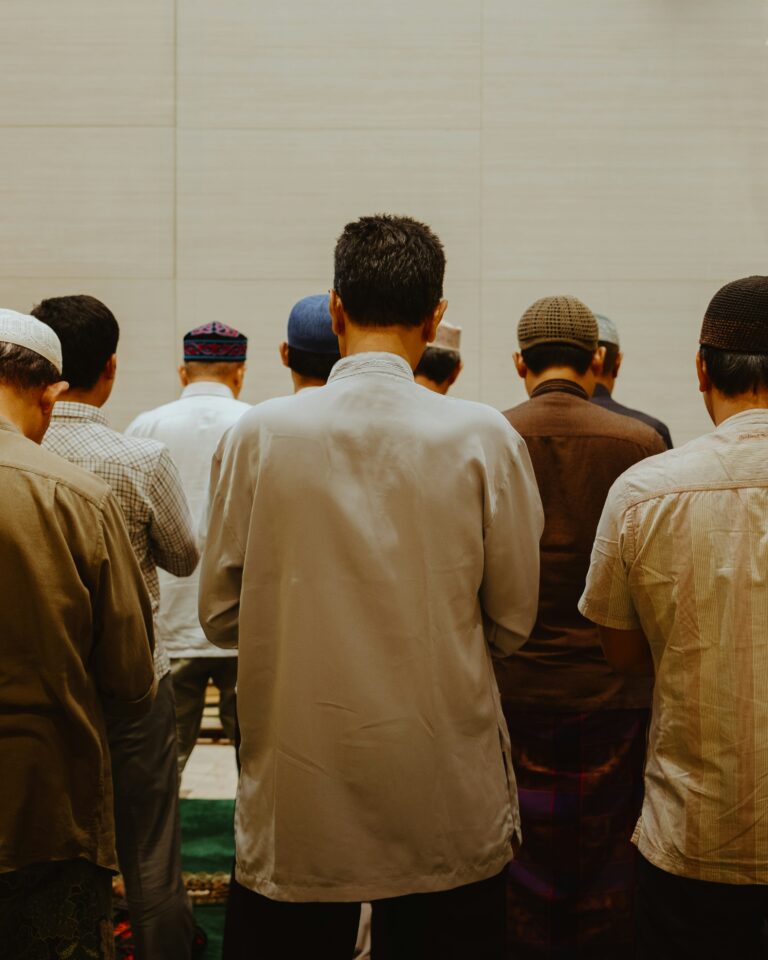


The sun was well on its way up. The city was bright and morning traffic was starting to pick up. Adnan put down his paperwork, performed wudu’ and prayed two units of Duha prayer. Then he sat on his prayer mat for a few minutes of du’a and reflection.
He was alone in his new office unit, having come in straight after Fajr prayer. He was working hard towards the big launch and wanted to make the most of the blessed early hours. Having quit his job three months ago, Adnan had worked non-stop to make his career dream come to fruition. He had been working long hours, tired but content as things were falling into place nicely.
The business name was registered with ACRA, he had managed to find a good office space on Robinson Road, the renovations were few and completed fairly quickly, equipment had been purchased and installed, the signboards had gone up, and the business cards had just arrived that evening, hot off the press! The excitement was certainly building up.
Adnan was grateful he had started with Salatul Istikhara for guidance and blessing, along with frequent Salatul Hajjah for every need along the way. Those were tips from his grandfather—a successful businessman himself—and they worked well, alhamdulillah. His secret sauce, if you will.
There was only one thing left to do now—hiring the right staff.
Adnan ran an index finger along the pattern on his prayer mat, ruminating on that last item. That was the thing he had procrastinating on, because that was also the thing that he was most keen to get right.
He had worked in corporate spaces for 20 years, always as an employee and—on his last job—a mid-level manager. He had observed and learned a lot along the way about workplace best practices, safety guidelines, audits, ISO standards, employee handbooks, HR protocol, termination lawsuits, downsizing, restructuring, team-building activities, motivation, mentoring, subtle and explicit bullying, DEI, and more.
In his 20 years of work life, Adnan had seen the good, the bad, and the ugly. He wanted none of those for his new business. He wanted only the best. In starting this new business on his own terms, not only was he hoping to continue earning an honest living and providing for his loved ones, but he was also hoping to set a new precedent for corporate life—one that was based on timeless Prophetic principles, just like his grandfather had taught him.
He prayed Salatul Hajjah and made du’a for the task that lay ahead of him that day, then rose up and put the prayer mat away neatly. The task of the day, he had decided, would beto outline an ethics-based policy for the workplace culture that he hoped to instil, starting from the very first employees he was going to hire.
He thought about the various situations he had witnessed during his 20 years of corporate life. He had seen burnout, petty politics, and manipulation, just to name a few issues that are rampant and swept under the rug. He saw hardworking colleagues being undermined, and real talent being driven away due to nepotism.
In all these cases it was easy to get away without accountability. The higher-ups were attending to compliance, the rules were published on the internal company portal, boxes were ticked, there were no charges that they could be held against. The bar was set low— just don’t get sued.
As a Muslim, he knew that accountability surfaces somewhere, though. If not now, then later, and that later could be as late as the Hereafter. Where no human or camera is watching, Allah (ﷻ) always is. Where something is ‘technically not wrong’, the conscience still nags.
With all this in mind, Adnan began writing down the main principles he wanted to base the company culture around.
The term ‘burnout’ has been fiercely discussed in the context of modern work. Beyond matters of compliance and the responsibility of organisations to be invested in the well- being of its employees, Adnan believed that intentions played a significant part.
Every person on the team would have to be sincerely aligned to the team’s purpose, applying only if they could truly relate to what the company was working towards. The skills could be trained, the experience could be accumulated, but the intentions deep within—
those would dictate the outcome.
As the Prophet Muhammad (ﷺ) is famously reported to have narrated, the outcome of every action stems from its intention (niyyah). [Bukhari, Muslim, and others.]
إِنَّمَا الأَعْمَالُ بِالنِّيَّةِ
If someone was on the team seeking only provisions and promotions, that would eventually show, and not in a good way. On the contrary, if someone was genuine in wanting to serve the company’s purpose along with making a living out of it, that would also show.
Run-of-the-mill obligations such as being punctual, meeting deadlines, and fulfilling the job scope would carry greater weight when carried out seeking the pleasure of Allah (ﷻ) rather than merely trying to stay out of trouble.
Despite challenges and breakdowns along the course of work, sincere intentions would draw Divine blessings. Therefore, the aspect of sincerity would matter across all levels of the organisation, starting with Adnan as the founder and CEO, and then to everyone who comes afterwards.
Having alignment and sincerity as the guiding compass would help in foreseeing issues of potential burnout, in navigating challenges, and in making decisions that sit right with the heart. Sincerity of intention would lead to honest conversations taking place before matters escalate, managers looking after their teams, and every team member approaching their work from the right place.
Adnan didn’t regard the seeking of promotions as blameworthy. Rather, sincerity is about asking why one wants the promotions.
Adnan wanted to create a culture where work would get done without being chased, and even when the manager was absent. He recalled many previous encounters where colleagues had resorted to ‘timesheet padding’ to earn more than was due, or where company secrets had been leaked to competitors, or where company clients had been diverted for personal gain.
These were serious breaches of trust that could escape accountability unless the individual themselves were constantly aware that work is an act of worship and carries with it implicit trust (amanah). An honest day’s work brings with it a good night of sleep.
This sense of amanah would have to be upheld both ways—from him towards his employees and from his employees towards him and the company. Too often he saw workers being hired without proper contracts, wages being withheld or miscalculated, confidential employee information being leaked to those without authority, ideas being stolen by mid- level managers and presented to higher-ups as their own, and more. There would be no room for this type of behaviour at his company, because of the consciousness that Allah is watching even when no one else is.ْ
“Indeed, Allah commands you to render trusts to whom they are due…” [Surah An-Nisa:58]
All people would be treated with fairness. Everything from hiring decisions to conflict resolution would have to be handled with fairness to the people concerned, regardless ofhow much it would cost the company in terms of finances or reputation. Talent and skills would be rewarded, rather than skin colour or social background, and credit would be given where it was due. Backbiting, petty politics, or any behaviour that would undermine the unity and strength of the team would not be tolerated, with appropriate channels being provided for any sort of discrimination to be reported and addressed fairly.
ِ۞ يَـٰٓأَيُّهَا ٱلَّذِينَ ءَامَنُوا۟ كُونُوا۟ قَوَّٰمِينَ بِٱلْقِسْطِ شُهَدَآءَ لِلَّهِ وَلَوْ عَلَىٰٓ أَنفُسِكُمْ أَوِ ٱلْوَٰلِدَيْنِ وَٱلْأَقْرَبِينَ ۚ إِن يَكُنْ غَنِيًّا أَوْ فَقِيرًۭا فَٱللَّهُ أَوْلَىٰ بِهِمَا ۖ فَلَا تَتَّبِعُوا۟ ٱلْهَوَىٰٓ أَن تَعْدِلُوا۟ ۚ وَإِن تَلْوُۥٓا۟ أَوْ تُعْرِضُوا۟ فَإِنَّ ٱللَّهَ كَانَ بِمَا تَعْمَلُونَ خَبِيرًۭا
“O you who have believed, be persistently standing firm in justice, witnesses for Allah, even if it be against yourselves or parents and relatives. Whether one is rich or poor, Allah is more worthy of both. So follow not [personal] inclination, lest you not be just. And if you distort [your testimony] or refuse [to give it], then indeed Allah is ever, with what you do, Acquainted.” [Surah An-Nisa:135]
One of Adnan’s favourite narrations from the hadith of Rasulullah (ﷺ) is:
إِنَّ اللَّهَ يُحِبُّ إِذَا عَمِلَ أَحَدُكُم عَمَلًا أَن يُتقِنَهُ
“Indeed Allah loves that when anyone of you does a job, he should perfect it (i.e. do it well).” [Musnad Abu Ya’la]
As much as he wanted every interaction to be carried out with sincerity, accountability, and fairness, it was also important that everything be concluded with excellence. He liked the term ‘ihsan’ which carries with it the root meanings of goodness and excellence and the term ‘itqan’ which connotes high quality and diligence.
Concluding actions with excellence would cover simple things like proofreading every piece of writing, and also big things like going beyond the literal job description to complete the job with beauty. Ihsan and itqan would not become excuses for pushing people to work beyond their limits or beyond what is reasonable. Rather, they would be about raising one’s personal standard to embody beauty, attention to detail, patience with difficult clients, etc.
Yes, these four (S-A-F-E) would be the guiding principles. In order to keep these principles front-and-centre of every work interaction, Adnan decided to design a poster to put upacross different areas of the office. A detailed manifesto would go into the employee induction handbook.
It was almost time for the Dhuhr prayer when he was done with both the manifesto and the poster. Adnan sat back and cracked his knuckles. He read through his work one more time, correcting and re-wording as appropriate, implementing the ihsan that he had just written about.
Satisfied, he saved both files as the very first documents in the ‘Recruitment’ folder, and set a reminder to have the poster printed out. Now he was ready to start hiring.
Bismillah.

Nearest MRT :
Orchard & Somerset
Address:
Al-Falah Mosque
22 Bideford Road #01-01,
Singapore 229923
Contact Number:
+65 6235 3172
Fax:
+65 6735 5580
Email:
[email protected]
Copyright © 2022 Masjid Al-Falah. All Rights Reserved.